Gas Appliance Installation Belmont
Gas appliance installation in Belmont covers cooktops, ovens, BBQs, pool heaters and any other gas unit that needs connecting to the house line. A licensed gas fitter does every job, pressure-tested and certified, at a price agreed in advance. Book it with your plumber in Belmont by phone or form; other gas fitting work has its own page.
Licensed plumbers and gas fitters · NSW Lic. 359278C
Last updated September 2026
What can we connect for you?
The short answer is anything that burns gas in a home:
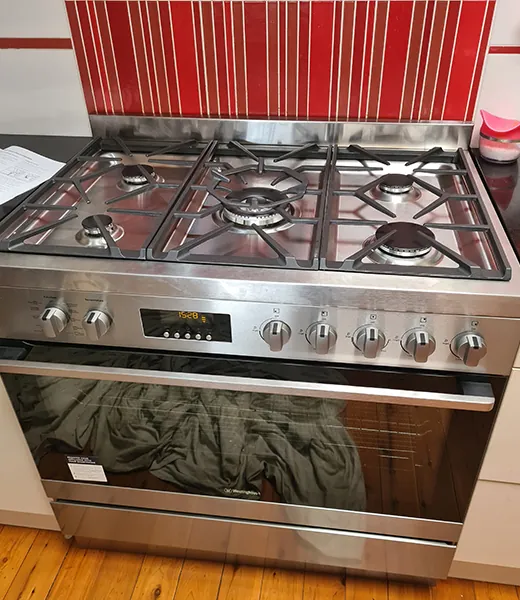
- Cooktops and ovens, including swaps from electric to gas
- Freestanding stoves and built-in hobs
- Outdoor BBQ points, run off the house line so bottles are gone
- Pool heaters and their gas feeds
- Gas points for heaters, relocated or newly run
If the appliance is second-hand, we check it against the line before connecting, because an old unit on a tired line is the one combination worth testing first.
Can the old line carry it?
This is the question that matters most on this peninsula. Plenty of the fibro and weatherboard houses near the town centre still run gas fittings from the decade they were built in, and a new oven or cooktop draws gas at a rate that pipework from the 1950s was never sized for.
Three checks settle it before anything is disconnected:
- A pressure test on the existing line to see what it holds
- A look at the pipe itself, since salt-laden air corrodes exposed copper fittings faster here than inland
- A size comparison between the appliance's demand and the line's capacity
A sound line means the appliance goes straight on. A weak one means the quote includes new pipe first, listed as its own item.
How we install a gas appliance
Every gas appliance job follows the same sequence:
- 01
Isolate and test
The gas is shut off at the meter and the existing line is pressure-tested before we touch the appliance.
- 02
Connect or run new pipe
The appliance is fitted, or a new line is run in coastal-grade materials where salt air will reach it.
- 03
Pressure-test the finished work
The new connection holds pressure on a gauge, every joint gets the gas detector, and then the burners are lit and adjusted.
- 04
Certify it
You get the compliance paperwork, and the job carries our 365-day warranty on all work.
What moves the price?
We provide up-front, honest quotes that will always match the final price, should you decide to go ahead.
The figure moves on four things:
- Whether the existing line passes its pressure test or needs upgrading first
- How far new pipe has to run, a cooktop swap versus a BBQ line across the yard
- The materials, since external runs on this peninsula get coastal-grade pipe that stands up to the salt air
- Access to the run, under-floor work on a low sandy block takes longer than a straight run through a wall
The line test decides which of those jobs you actually have.
Salt air and the older stock. The post-war cottages between the Pacific Highway and the lake foreshore carry a double load: fittings installed decades ago, and onshore air that corrodes every exposed connection year-round. A new appliance bolted onto tired fittings is a false economy, so we inspect the line as part of the install, not as an extra. That includes the mid-century homes in the streets around the Belmont Citi Centre.
Smelling gas already? That is a repair, not an install, and our gas leak detection service handles it. A heavy smell means the gas network's emergency line comes before any plumber.
When we're not the right call
An induction cooktop or electric oven needing a new circuit is wiring work for an electrician. Anything on the street side of your gas meter is the gas network's pipe to fix. Choosing a gas hot water unit starts on the hot water page, and the connection follows once you have picked.
"We had an urgent gas problem that required immediate attention at our home…on a Friday afternoon. … Identified the issue, fixed and tested" Lee
Gas appliance questions we hear
Do I need a licensed gas fitter to install a cooktop?
Yes. NSW law requires a licensed gas fitter to connect and certify any fixed gas appliance, including the pressure test on the line afterwards. Keep the compliance certificate; it shows the connection was done to the standard.
Can an older house's gas line support a new oven?
Sometimes. Mid-century houses around the town centre often carry gas pipework that has been in place for decades, and the line size or the pipe condition can rule an appliance in or out. We pressure-test before we quote, so you know the line can carry the appliance before any money changes hands.
Do you connect outdoor BBQs and pool heaters?
We do. BBQ lines and pool heater connections are standard work here, run in coastal-grade copper or polyethylene so the onshore salt does not eat through them the way it works through plain fittings. The gas detector goes over every joint on the new run as well.
How long does a gas appliance install take?
A straightforward cooktop or oven swap on a sound line is done in the one booking. A new line run to a BBQ or pool heater, or an upgrade on ageing gas fittings, takes longer because the piping work comes first. The fixed quote covers whichever version your job turns out to be.
Need a plumber? Call or send the form
Call (02) 4063 3475 or send the form below. Available 24/7, you see a fixed figure ahead of any work, and every job carries our 365-day warranty on all work.
Request a callback
Leave a name and number and a plumber will ring you back.